
Work Process
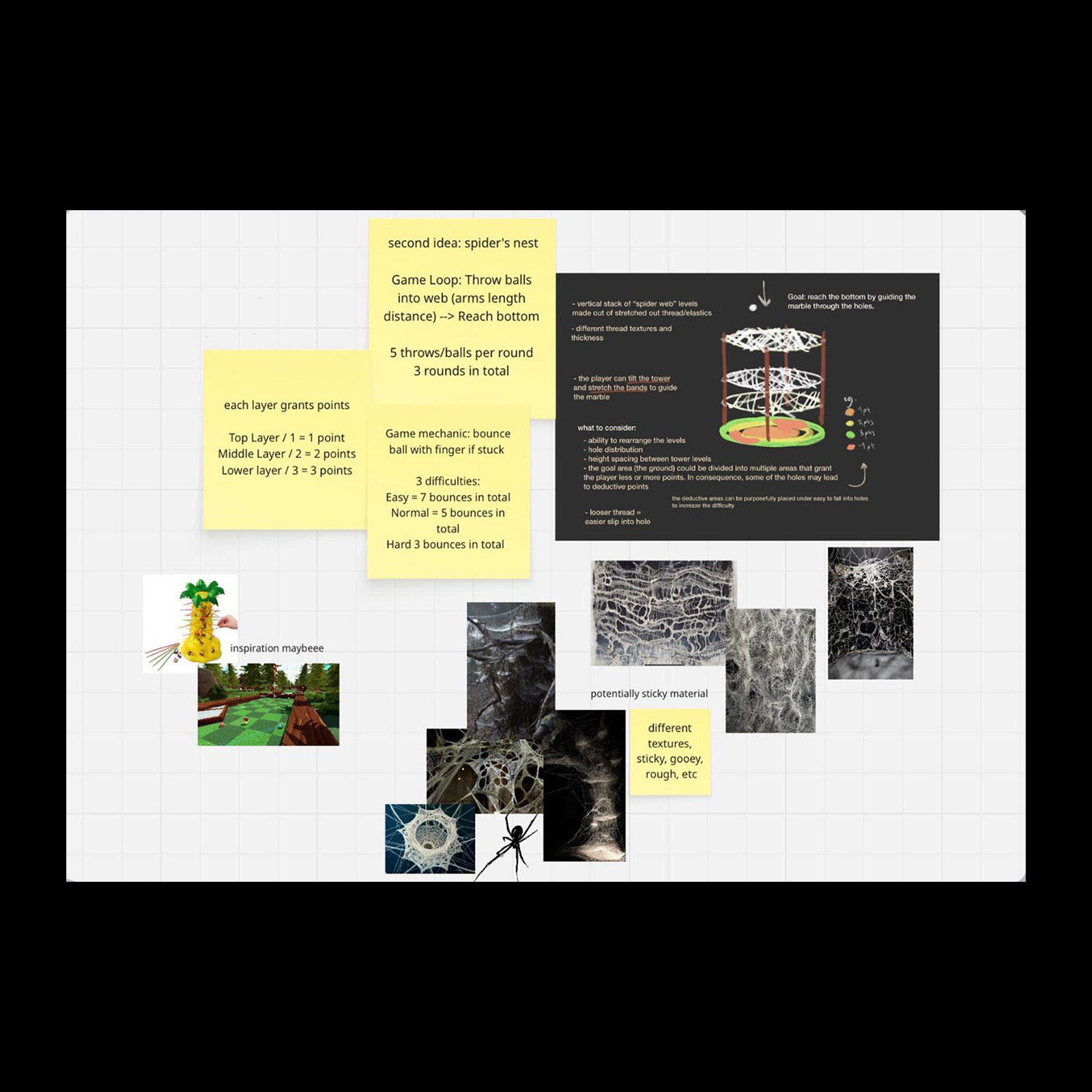
Spider’s Web was a collaborative project with the goal of designing a tabletop game inspired by nature. The design process literally started with going outside. My teammates and I explored the forest near our university campus, looking at all the little things that would usually be ignored and writing them down. This could be anything. Branches, boulders, pebbles, the water in the river. Everything was considered, but only a few ideas made sense together. At the end of our exploration we sat together to dwell on our ideas in terms of game design and aesthetics. At this point all of our ideas were still quite rough and we weren’t too sure if we had anything in our hands at all. But after some time and a few more discussions we managed to narrow it down to two different ideas. Spider’s Web ultimately ended up being the one we pursued.
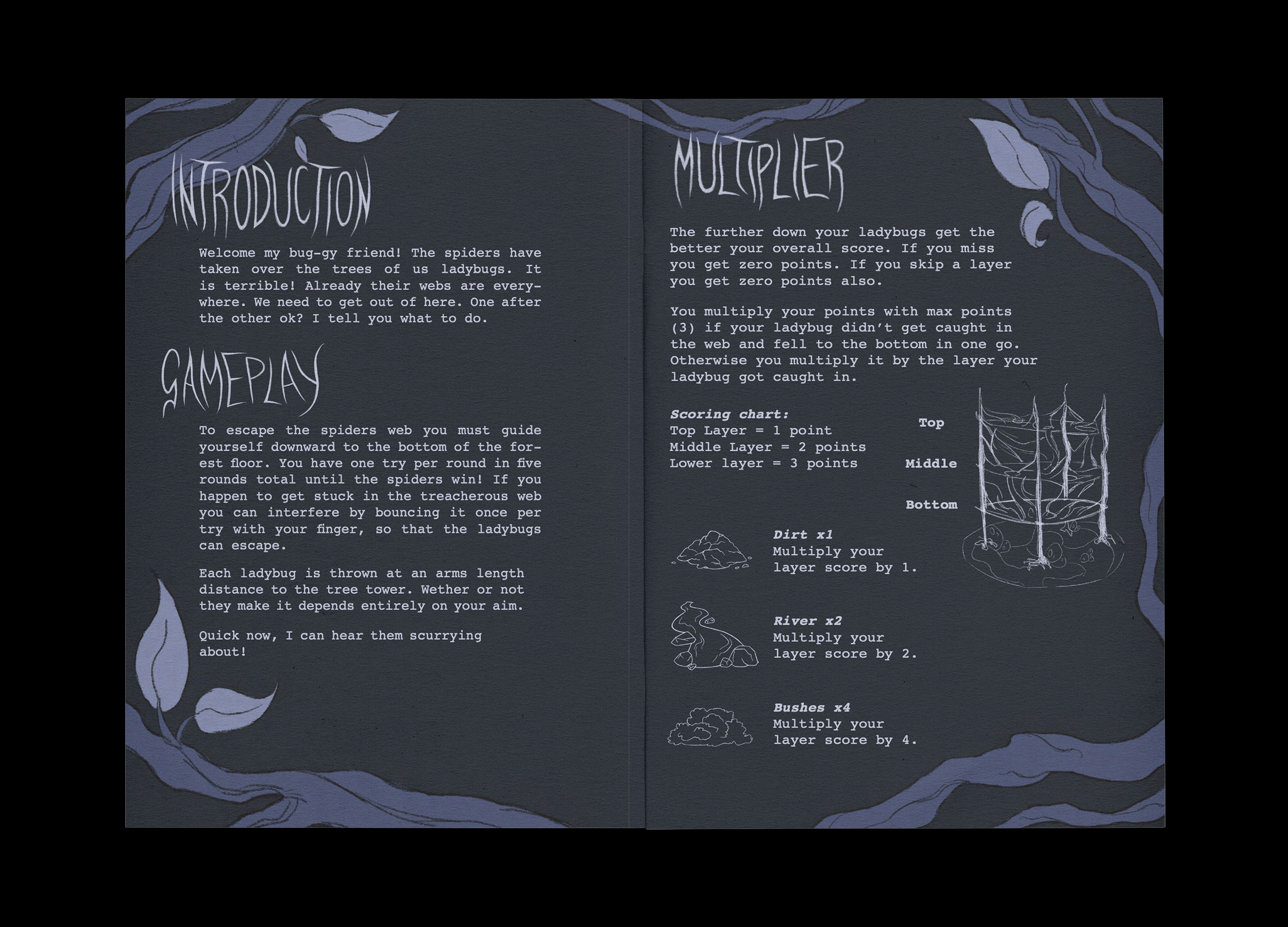
The game challenges dexterity and the players motor skills. The premise goes as follows: The spiders have spun a web over three platforms. You, a ladybug must escape or else be eaten by the enemies! To do this you have to reach the bottom of the platforms, avoiding the webs of the spiders and gather points depending on how far you manage to go down. The player with the most points wins. Yay!
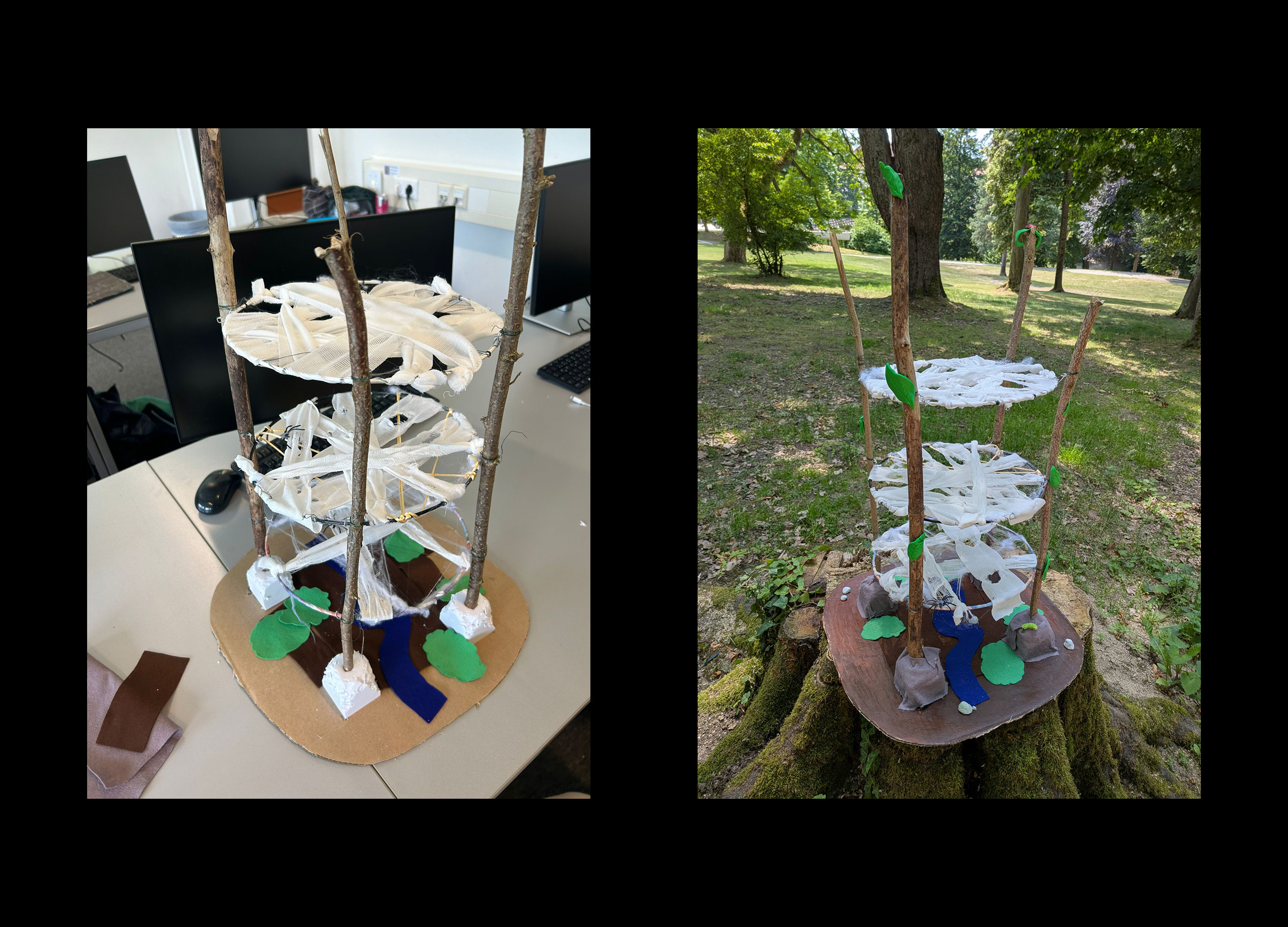
In order to test the gameplay we built three prototypes. The last one functioned the best combining everything we’ve previously learned from other iterations, having the most stability, replayability and the prettiest design out of the three of them.
Reflecting upon the project as a whole let me see how tough prototyping can be, especially if you’re not used to building models. But doing it and slowly figuring out the way to go was quite satisfying in the end. Our game ended up working pretty great after some more rule adjustments and my teammates and I had a lot of fun testing it throughout the process.
 haughtyshock